
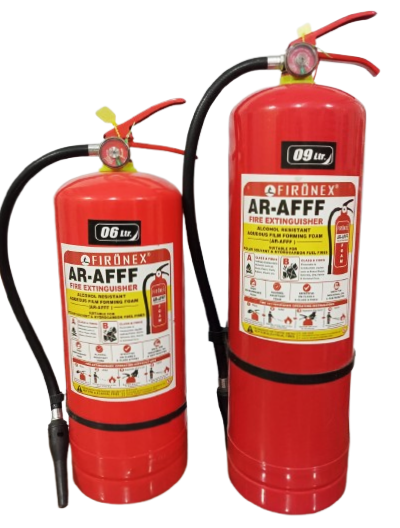
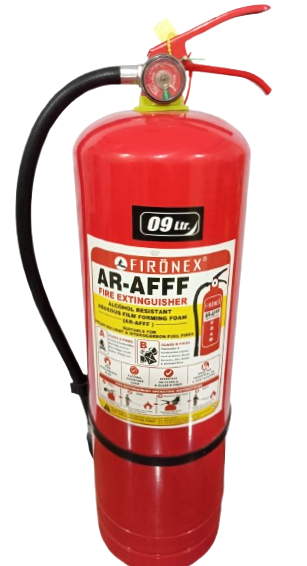
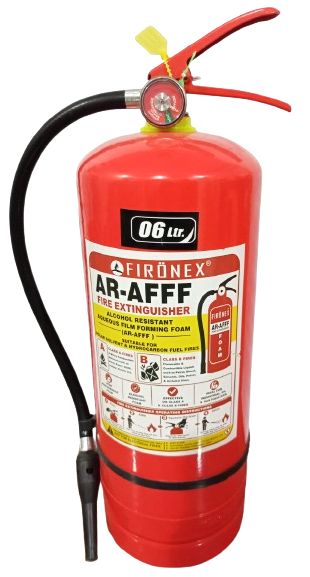
Alcohol-Resistant AFFF Fire Extinguisher
Advanced Foam Protection for Class A & Class B Fires
The Alcohol-Resistant AFFF (AR-AFFF) Fire Extinguisher is designed for effective protection against Class A combustible materials and Class B flammable liquids, including both hydrocarbon fuels and polar solvents.
AR-AFFF forms a stable foam blanket over the burning surface, helping to suppress flames, reduce vapor release, cool the fuel surface, and minimize the risk of re-ignition. Its alcohol-resistant formulation provides enhanced performance where conventional AFFF may be less effective, particularly on polar solvent fires.
Suitable Fire Applications
Hydrocarbon Class B Fires
- Petrol / gasoline
- Diesel
- Kerosene
- Other approved hydrocarbon fuels
Polar-Solvent Class B Fires
- Ethanol
- Methanol
- Isopropanol
- Other water-miscible flammable liquids
Class A Fires
- Wood
- Paper
- Textiles
- Cardboard
- Other ordinary combustible materials
⚠️ Not Suitable For
- Live electrical equipment
- Fires involving reactive metals (Class D)
- Cooking-oil/fat fires (Class F or K)
Key Features
🛡 Alcohol-Resistant Foam Technology
Provides enhanced protection against polar solvent and water-miscible flammable-liquid fires, subject to the foam formulation’s approval and application limitations.
🔥 Effective Class A & B Protection
Suitable for a wide range of ordinary combustible materials and flammable-liquid hazards.
💧 Stable Foam Blanket
Creates a protective foam layer that helps separate the fuel from oxygen and suppress flammable vapors.
🔄 Helps Prevent Re-Ignition
The foam blanket provides continued surface coverage after initial flame knockdown, helping reduce re-ignition risk.
🏭 Industrial-Grade Construction
Inner-coated cylinder provides additional protection against corrosion and supports long-term serviceability.
⚡ Easy & Rapid Operation
Portable design allows quick deployment during the early stages of a fire emergency.
Why Choose AR-AFFF?
AR-AFFF combines the film-forming performance of AFFF with alcohol-resistant foam technology, making it particularly valuable for environments where both hydrocarbon and polar-solvent fire hazards may be present.